What makes Jerusalem so holy?

Jerusalem – its name resonates in the hearts of Christians, Jews and Muslims alike and echoes through centuries of shared and disputed history.

Known in Hebrew as Yerushalayim and in Arabic as al-Quds, it is one of the oldest cities in the world. It has been conquered, destroyed and rebuilt time and again, and every layer of its earth reveals a different piece of the past.Media caption,

Tour guide Shraga Ben Yosef provides a quick trip around Jerusalem’s holiest sites

While it has often been the focus of stories of division and conflict among people of different religions, they are united in their reverence for this holy ground.

At its core is the Old City, a maze of narrow alleyways and historic architecture that characterises its four quarters – Christian, Muslim, Jewish and Armenian. It is surrounded by a fortress-like stone wall and home to some of the holiest sites in the world.

Each quarter represents its own population. The Christians have two, because Armenians are also Christians, and their quarter, the smallest of the four, is one of the oldest Armenian centres in the world.

It is unique in that their community has preserved its own particular culture and civilisation inside the St James Church and monastery, which comprises most of their section.

The church

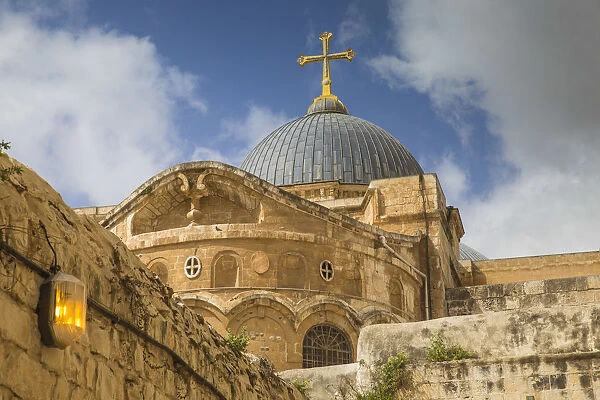
Inside the Christian Quarter is the Church of the Holy Sepulchre, a significant focus for Christians all over the world. It is located on a site which is central to the story of Jesus, his death, crucifixion and resurrection.

According to most Christian traditions, Jesus was crucified there, on Golgotha, or the hill of Calvary, his tomb is located inside the sepulchre and this was also the site of his resurrection.

The church is managed jointly by representatives of different Christian denominations, mainly the Greek Orthodox Patriarchate, Franciscan friars from the Roman Catholic Church and the Armenian Patriarchate, but also by the Ethiopians, Coptics and Syrian Orthodox Church.

It is one of the main pilgrimage destinations for millions of Christians worldwide who visit the empty tomb of Jesus and seek solace and redemption in prayer at the site.Media caption,

Greek Orthodox Patriarch Theophilus III explains why Jerusalem’s Church of the Holy Sepulchre is the holiest place in Christianity

The mosque

The Muslim Quarter is the largest of the four and contains the shrine of the Dome of Rock and the al-Aqsa Mosque on a plateau known to Muslims as Haram al-Sharif, or the Noble Sanctuary.

The mosque is the third holiest site in Islam and is under the administration of an Islamic trust called the Waqf.

Muslims believe the Prophet Muhammad travelled here from Mecca during his night journey and prayed with the souls of all the prophets. A few steps away, the shrine of the Dome of the Rock holds the foundation stone, where Muslims believe Muhammad then ascended to heaven.
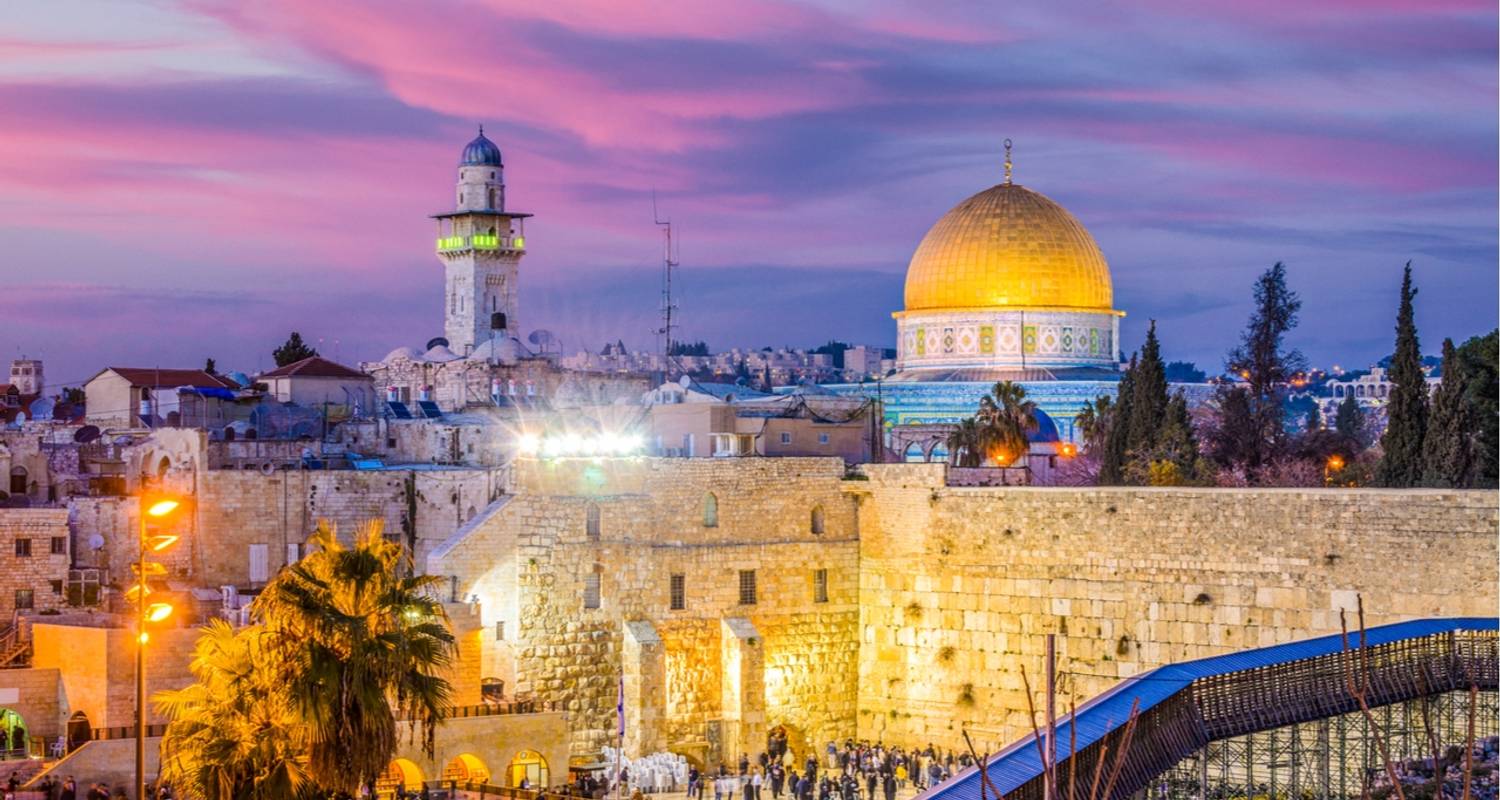
Muslims visit the holy site all year round, but every Friday during the holy month of Ramadan, hundreds of thousands of Muslims come to pray at the mosque.Media caption,

Sheikh Azzam al-Khatib al-Tamimi explains the importance of Jerusalem’s al-Aqsa mosque to Islam

The wall

The Jewish Quarter is home to the Kotel, or the Western Wall, a remnant of the retaining wall of the mount on which the Holy Temple once stood.

Inside the temple was the Holy of Holies, the most sacred site in Judaism.

Jews believe that this was the location of the foundation stone from which the world was created, and where Abraham prepared to sacrifice his son Isaac. Many Jews believe the Dome of the Rock is the site of the Holy of Holies.

Today, the Western Wall is the closest place Jews can pray to the Holy of Holies.

It is managed by the Rabbi of the Western Wall and every year hosts millions of visitors. Jewish people from all over the world visit this place to pray and connect to their heritage, especially during the High Holidays.

Read more

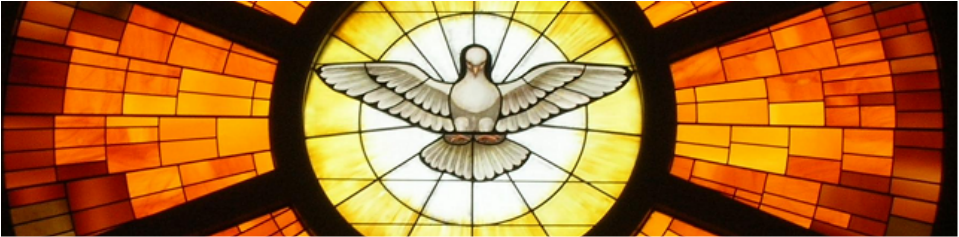
7 Gifts of the Holy Spirit

The Catechism of the Catholic Church states:

The Seven Gifts of the Holy Spirit are Wisdom, Understanding, Counsel, Fortitude, Knowledge, Piety, and Fear of the Lord. They belong in their fullness to Christ, Son of David. They complete and perfect the virtues of those who receive them. They make the faithful docile in readily obeying divine inspirations. (CCC, 1831)

The Catholic Church derives this information on the Seven Gifts of the Holy Spirit from scripture:

​​The Spirit of the LORD will rest on Him, The spirit of wisdom and understanding, The spirit of counsel and strength, The spirit of knowledge and the fear of the LORD. And He will delight in the fear of the LORD, And He will not judge by what His eyes see, Nor make a decision by what His ears hear; But with righteousness He will judge the poor, And decide with fairness for the afflicted of the earth; And He will strike the earth with the rod of His mouth, And with the breath of His lips He will slay the wicked. (Isaiah 11:2-4) 

Picture

1. Wisdom

​Wisdom is not the quoting of facts. Wisdom is a gift that allows a person to understand things from God’s point of view. In other words, Wisdom allows a person to recognize truth. A person with the Gift of Wisdom is able to take this truth and use it to glorify God by choosing Godly solutions to problems. 

2. Understanding

Understanding is the second gift of the Holy Spirit, and people sometimes have a hard time understanding (no pun intended) how it differs from wisdom. While wisdom is the desire to contemplate the things of God, understanding allows us grasp, at least in a limited way, the very essence of the truths of the Catholic Faith. Through understanding, we gain a certitude about our beliefs that moves beyond faith

3. Counsel

​The Gift of Counsel is also known as a Gift of Right Judgment. Counsel, the third gift of the Holy Spirit, is the perfection of the cardinal virtue of prudence

. Prudence can be practiced by anyone, but counsel is supernatural. Through this gift of the Holy Spirit, we are able to judge how best to act almost by intuition. Because of the gift of counsel, Christians need not fear to stand up for the truths of the Faith, because the Holy Spirit will guide us in defending those truths.

4. Fortitude

​The Gift of Fortitude is also known as the Gift of Courage. Through this Gift a person is no longer afraid to stand up for God and His truths. A person who has the Gift of Fortitude will stand up for good against evil and is convicted to take a stand when the occasion arises.

5. Knowledge

​The Gift of Knowledge allows a person to understand the meaning and purpose God has for him and to live up to this meaning. It differs from wisdom in that it is an action, not just a desire to live up to the ways of God. It differs from Understanding in that it is not just ability, it is a knowing.

​6. Piety

Piety, the sixth gift of the Holy Spirit, is the perfection of the virtue of religion. While we tend to think of religion today as the external elements of our faith, it really means the willingness to worship and to serve God. Piety takes that willingness beyond a sense of duty, so that we desire to worship God and to serve Him out of love, the way that we desire to honor our parents and do what they wish.

​7. Fear of the Lord

​The Gift of Fear of the Lord puts God in the proper perspective. A person with this Gift understands the greatness and awesomeness of the Lord. They want to serve Him because of who He is. A person with the Gift of Fear of the Lord understands who they are and why they are here in relationship to God; In other words, everything they are is due to the wonder, love, grace, and perfection of God. They are totally dependent on the Lord as a child is to a parent. The Gift of Fear of the Lord is the beginning of Wisdom. Once a person understands who God is and desires to please Him, they can begin to understand things from God’s point of view or have Wisdom.

Read more