Holy Ground: The Importance of Jerusalem for Jews
After millennia of being ruled by others, and after the horrific losses of the Holocaust, Jews the world over visit Israel to connect with their roots and behold what, against all odds, now exists as a Jewish homeland. Not every Jew has chosen to claim their legal right to immigrate to Israel, but they still feel connected in Israel to the founders of their faith and ethnicity. Their promised land is more than a collection of holy sites. It is holy in itself.

The Temple Mount

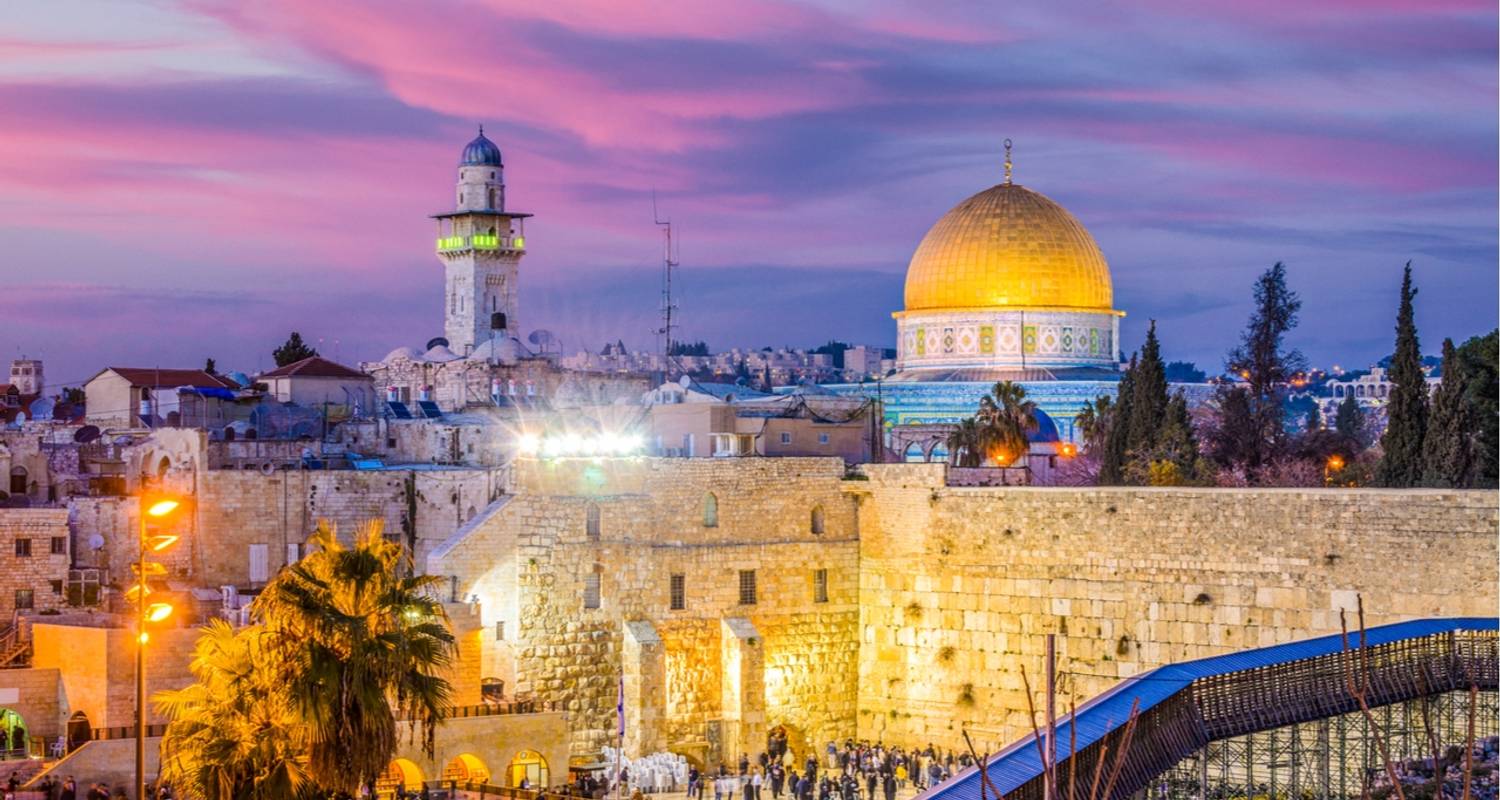
Every year at Passover Seder dinner, as Jews say to one another “Next year in Jerusalem,” they speak with hope of what’s to come. As they wait for God to reestablish an earthly kingdom for them, they journey to what they consider holy, significant places where God has historically made his dwelling among them. Jerusalem hosts two of the most important sites: the Temple and its Western Wall (“the Kotel,” in Hebrew).

The Temple’s central role traces back to the Old Testament as it housed the sacrificial system by which Jews kept the laws of the Torah and the covenant. Priests and scholars served God and instructed the community in the Temple, a place paramount to their identity as Jehovah’s people.

The Temple and the mount on which it was placed has significance that reaches back to the moment when history began. In the Jewish worldview, the Temple Mount was the site of the Garden of Eden. Melchizedek, the king of Salem—which Jews suppose to be Jerusalem—worshiped the Most High God there and blessed Abram. Abraham bound his son Isaac on the Mount, David defended and built a kingdom around it, and Solomon further anchored it in history by erecting on it the Temple of God.

Psalm 137:4 contains the Jews’ distraught cries after they lost the promised land in the exile: “How can we sing the songs of the Lord while in a foreign land?” (NIV). Losing access to the Temple and its eventual destruction created a total disorientation. Without the Temple, the literal question arose: how were they to keep their faith?
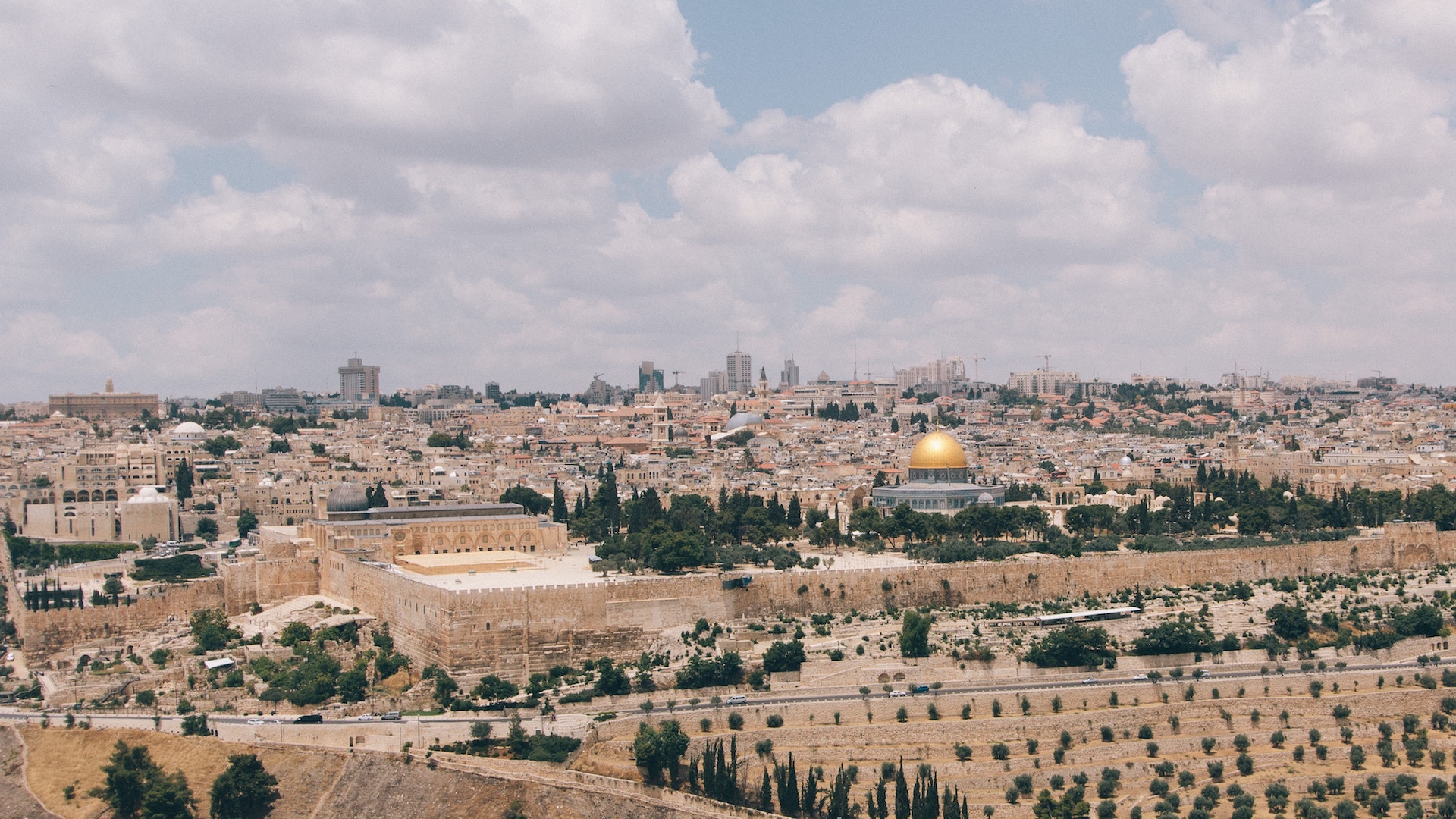
Jews believe the Temple Mount—the elevated, open space above the Western Wall—may be the location of the Holy of Holies where God’s presence dwells. Photo by Rob Bye

Today, the spacious, raised Mount of the destroyed Temple is home to two of Islam’s most sacred mosques, Al-Aqsa and the Dome of the Rock. The entire Mount is under Arab authority. Still, Jews believe the Temple Mount to be their holiest site of all. So holy, in fact, that Israel’s chief rabbinate posted a sign above the entrance discouraging Jews from even entering the site lest they stumble unprotected onto what once was the Holy of Holies. It is said that God’s presence is still there.

Today, touching the ancient stones on the Mount connects Jews to David, Abraham, and most importantly, to the presence of God on earth. The Mount is where their prayers rise up to God. Rabbis, in the centuries since the destruction of the second temple, established a system of prescribed prayers, good deeds, and repentance to replace the sacrificial system in Judaism. Since Jews no longer offer sacrifices, their prayers at special places like the Mount are all the more significant because they are expected to carry the weight once borne by sacrificed animals.

The Western Wall

Since it is within current political boundaries, the Temple Mount is inaccessible to most Jews. They feel especially connected to the Kotel as the only portion of the Temple they can touch. Tour guides often explain that though the English term “Wailing Wall” was used during the British Mandate, since the Six Day War in 1967 people have returned to using its traditional Jewish name, the Kotel, literally meaning “the wall” in ancient Hebrew. We in the West sometimes hear it referred to as the Western Wall.

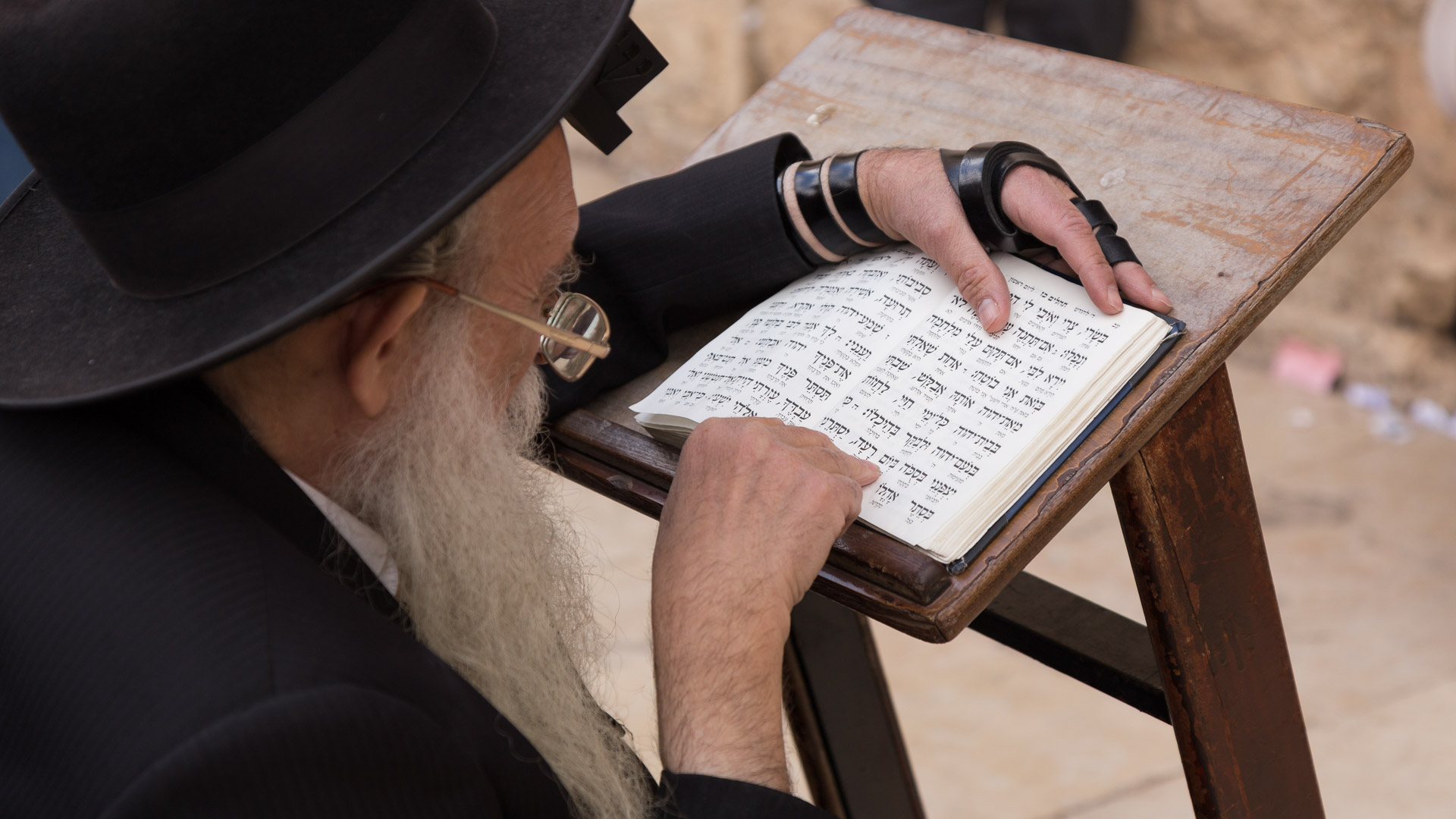
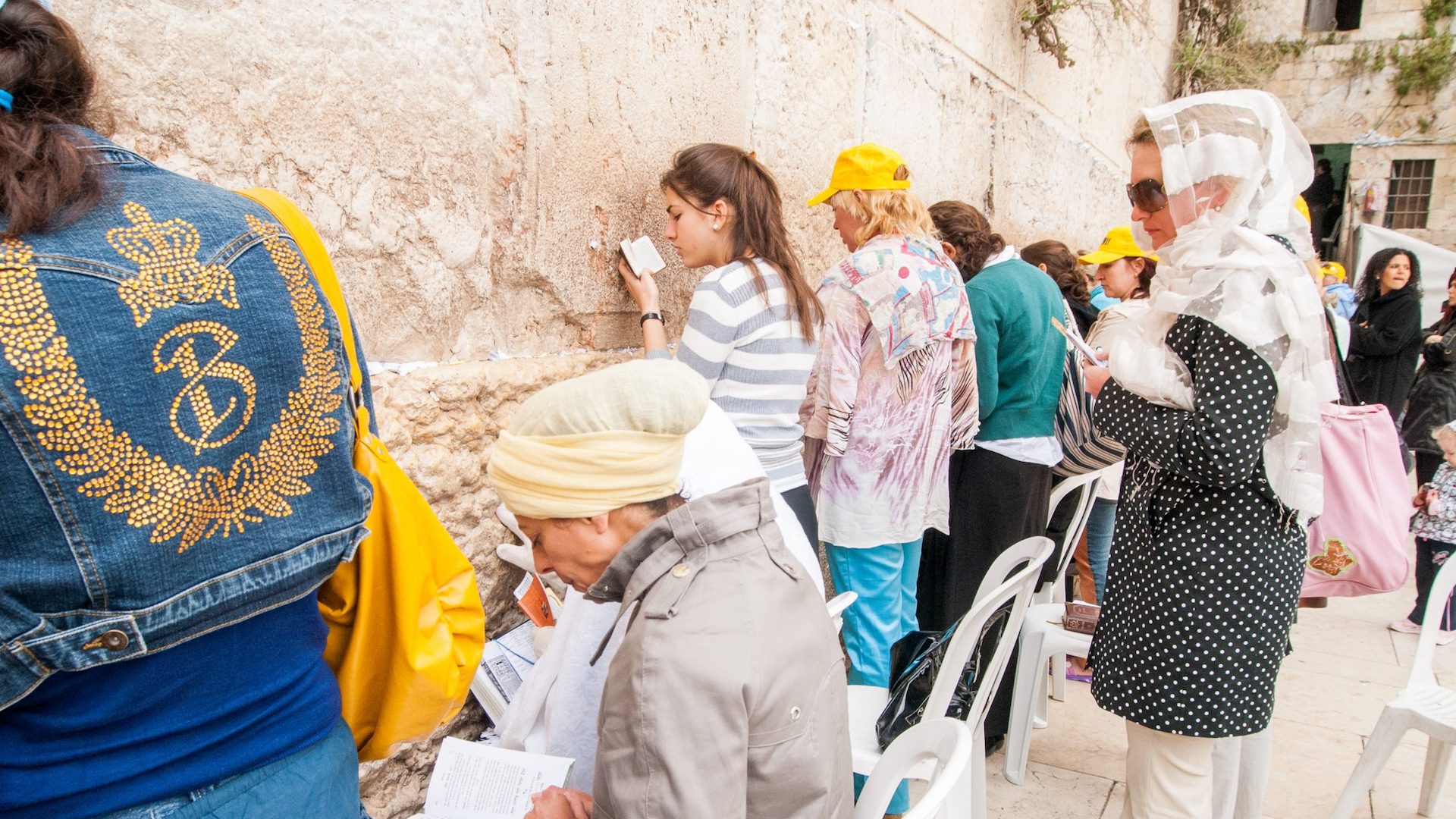
Many Jews feel the closest to God at the Kotel. After a security check and a ritual handwashing at the fountains, men proceed to the Wall via the left side of a partition and women to the right. Men adorn kippot, prayer shawls, and small, black boxes with portions of the Torah inside as they rock back and forth, bow, and cry out with earnest prayers. Women in prayer cover their heads, and some sit in chairs for hours reading from prayer books.
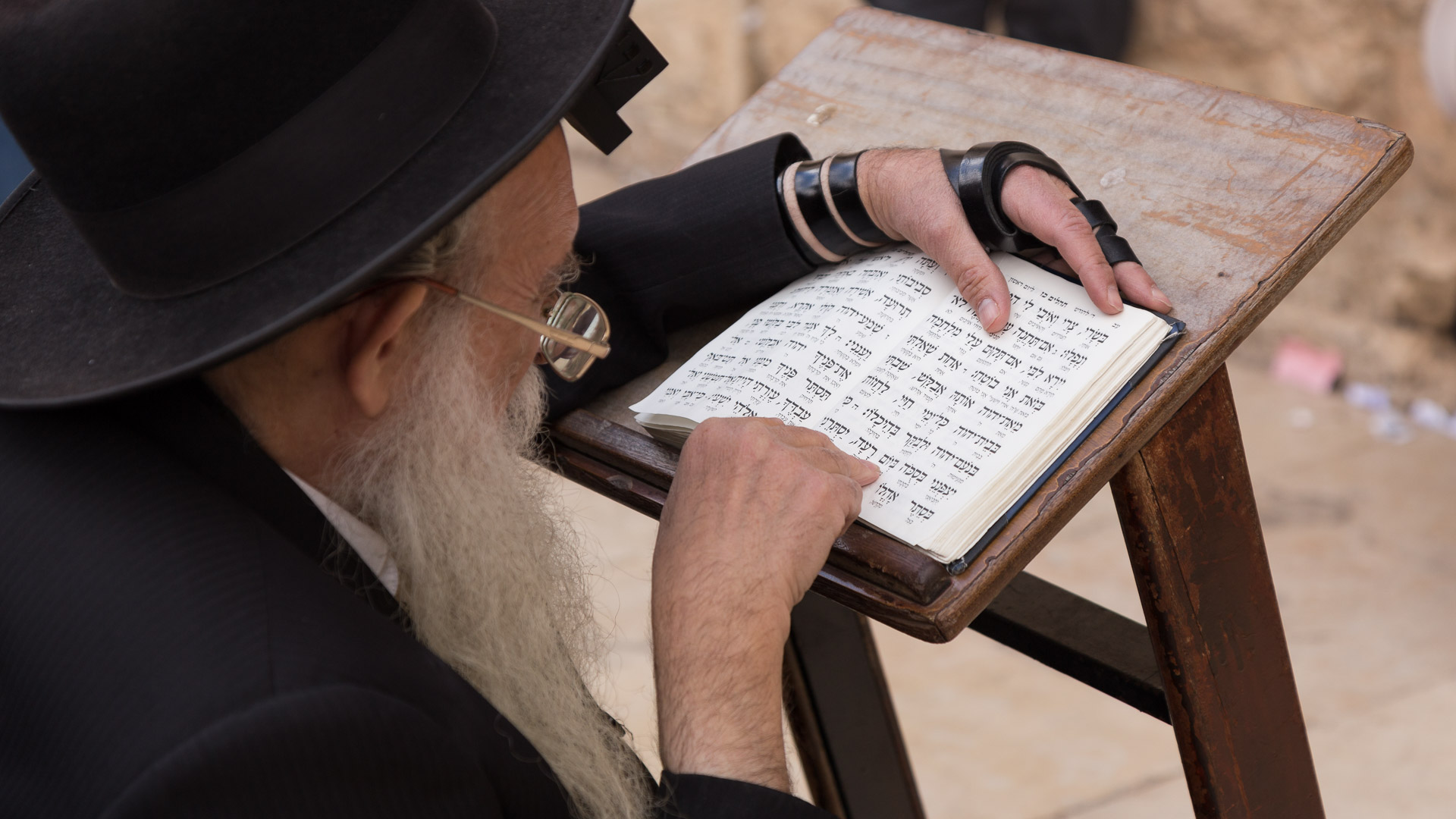
An elderly Orthodox Jew wears tefillin as he reads the Torah in front of the Western Wall in the Old City of Jerusalem. Photo by Max Power

Some people write out prayers, roll them up, and stick them in the crevices between the stones in faith that God will answer. After prayers at the Wall, people walk backward, in respect to God, up the pathway back toward the partition’s edge.

His Kingdom Is Not of This World

As Christians, we have the chance to seek out spiritually hungry Jews for whom Jerusalem is significant and holy. Whether you are in Israel for a tour or you have Jewish friends and colleagues, you can be still, ask God who to talk to, and then approach, ask questions, and listen. Seeing the importance of the Temple Mount through their eyes will help you talk about how God gave it to the Jews as a signpost pointing to Yeshua, who is nearer to us than the ancient stones.

Everyone without Christ needs the good news, but that news can be especially sweet for Jews still living in hope of an established earthly kingdom. Christians can freely try to engage them in conversation and listen for significant, personal connections between their holy sites and their current spiritual condition.

Pray that God’s kingdom will be built in and through Jewish hearts, not with temporary, ancient stones but through submission to Yeshua the Messiah.


Bethany Singer lives in Jerusalem and has served among Muslim, Orthodox Christian, and Jewish people. She enjoys relating to people through local languages, music, and cuisine, and facilitating the worship of the one true God among the nations.


Read more

Your Spiritual Gifts – How to Identify and Effectively Use Them.

Learning our spiritual gift(s) is a fun subject because we get to discover something about ourselves that we may not have known before.

A spiritual gift is something God has chosen specifically for you so that you can help with the advancement of the church on earth by serving and using your special ability.

This excerpt from the New Believer’s Bible explains it all:

What are spiritual gifts?

God has chosen people to do his work. He chose this course of action for reasons only he knows and understands. From a human perspective, we may wonder if this was the best decision. After all, the sky’s the limit concerning what God could have done. He could have chosen angels to speak to lost humanity. He certainly used them on many significant occasions throughout Scripture. Or God could have created a special category of messengers that would never fail him—a “sin-proof” instrument that would faithfully proclaim his Word. For that matter, God himself could have simply poked his face through the heavens and said, “Hello, world! I’m God, and you’re not!” But God has chosen men and women to do his work among humankind.

As we seek to follow and be used by Jesus Christ, we need to utilize all that he has made available to us. One of the great blessings Jesus has given to his church and to us as individuals is the gifts of the Spirit. Why has he given these gifts? The Bible has this to say about the vital role they play in the lives of believers:

Spiritual Gifts Enable Us to Grow in the Knowledge of Christ. Some people get sidetracked with spiritual gifts and become more obsessed with the gifts than with Jesus. Believers begin to follow signs and wonders, instead of signs and wonders following believers. This is a sign of spiritual immaturity. The Christian writer/preacher A. B. Simpson wrote these insightful words:

Once it was the blessing, now it is the Lord.
Once it was the feeling, now it is His Word.
Once his gifts I wanted, now the Giver own.
Once I sought for healing, now himself alone.

Attaining spiritual gifts is not the goal—they are the gateway. They are not a hobby to play with—they are tools to build with, weapons to fight with. We will be more effective as we put them to use for God’s glory and not our own.

Spiritual Gifts Are to Be Used. It is possible to let a gift go unused. In doing this, however, you disobey God and cheat the church of a blessing. For this reason, we must use those gifts he has given us. In fact, it must be insulting to God for us to demean some gift his Holy Spirit has instilled in our life by saying that it just isn’t important enough to use.

Looking for resources on spiritual gifts? Check out the selection from Tyndale House Publishers.

Each Spiritual Gift Has a Special Place in the Body of Christ. Every gift that God has placed in the body of Christ, the church, is important. Some gifts such as preaching, teaching, and prophesying may seem more important than others such as hospitality or service. But God has given all of these gifts to build up his church. None of these gifts should be looked down upon or treated lightly.

So, what are the spiritual gifts that God has given to his people? Here is a list:

  1. Administration
  2. Being an apostle
  3. Discernment
  4. Evangelism
  5. Exhortation
  6. Faith
  7. Giving
  8. Healing
  9. Helps
  10. Hospitality
  11. Knowledge
  12. Leadership
  13. Mercy
  14. Prophecy
  15. Serving
  16. Speaking in tongues
  17. Teaching (sometimes known as shepherding)
  18. Wisdom

Definitions:

ADMINISTRATION: The ability to help steer the church, or a ministry, toward the successful completion of God-given goals, with skills in planning, organization, and supervision.

APOSTLE: A person sent to new places with the gospel. You may have heard of missionaries going to different countries to help spread the Word; they could be described as apostles. An apostle can also provide leadership to other churches or ministries and offer advice on spiritual matters.

DISCERNMENT: The wisdom to recognize truth from untruth by correctly evaluating whether a behavior or teaching is from God or another, ungodly source.

EVANGELISM: The ability to successfully communicate the message of the gospel, especially to nonbelievers.

EXHORTATION: Competence in offering encouragement, comfort, and support to help someone be all that God wants them to be.

FAITH: People with this gift have such great confidence in the power and promises of God that they can stand strong in their belief, no matter what may try to shake them. They can also stand up for the church and for their faith in such a way as  to defend and move it forward.

GIVING: Those who have this gift are particularly willing and able to share what resources they have with pleasure, and without the need to see them returned.

HEALING: A capability used by God to restore others, be that physically, emotionally, mentally, or spiritually.

HELPS: Someone with this gift is able to support or assist members of the body of Christ so that they may be free to minister to others.

HOSPITALITY: A natural ability to make people—even strangers—feel welcome in one’s own home or church as a means to disciple or serve them.

KNOWLEDGE: This is the gift of someone who actively pursues knowledge of the Bible. This person may also enjoy analyzing biblical data.

LEADERSHIP: This aptitude marks a person who is able to stand before a church, to direct the body with care and attention, and to motivate them toward achieving the church’s goals.

MERCY: This is the defining trait of a person with great sensitivity for those who are suffering. It manifests itself in offering compassion and encouragement, and in a love for giving practical help to someone in need.

PROPHECY: The ability to speak the message of God to others. This sometimes involves foresight or visions of what is to come. This skill should be used only to offer encouragement or warning.

SERVING:  A talent for identifying tasks needed for the body of Christ and using available resources to get the job done.

SPEAKING IN TONGUES: The supernatural ability to speak in another language (one that has not been learned).

TEACHING: The skill to teach from the Bible and communicate it effectively for the understanding and spiritual growth of others.

WISDOM: The gift of being able to sort through facts and data to discover what needs to be done for the church.

It should be noted that not every Christian believes all these spiritual gifts are still given by God. Some think that there were certain gifts, such as speaking in tongues, that were handed down only for a time when they were needed in biblical history and are no longer needed now.

How do we determine which gifts God has given us?

  • As you were reading through the descriptions listed above, did any resonate with you? Perhaps that could be the gift or gifts you have been given.
  • You can ask your Christian friends which gifts they identify in you—very often they can see what you cannot and can observe which skills God has divinely assigned to you.
  • You can pray about it; if we ask God to lead us toward whatever gifts He has given us, he can make it clearer to us.
  • Some churches offer spiritual gifts classes to help you discover yours. Ask a leader at your church if this is something they offer.
  • You can also take an online spiritual gifts test—simply search online and you’ll find one. But a word of caution here: These tests may not be reliable, so take the results with a pinch of salt and be sure to keep pursuing the answer in prayer.

It’s very easy to lose sight of Jesus while we’re in pursuit of our spiritual gifts. Sometimes they can become idols to us, so don’t allow this to take your eye off the only one who matters.

Additionally, once we determine which gift or gifts we have, we can become a little pigeonholed within them. Just because you have the gift of teaching doesn’t mean you should be a pastor! There are multiple uses for each gift, and your mentors, friends, and church leaders can help you decide how best to use those amazing God-given skills of yours.

And you may find that your gifts change over time. For example, you might find that as you grow in your faith, you receive the gift of faith. This just happily means that you’re becoming a stronger person in Jesus and are increasingly able to talk about your faith in a confident way. But as we age, gain wisdom, have new experiences, and journey further with the Lord, we all inherently change, and therefore, so may your spiritual gifts. Think of it as God giving you a software update!

So, what are we to do when we know what our spiritual gifts are?

Once you determine which gift or gifts you have, start using them to glorify God. By using your spiritual gifts to volunteer in a ministry or around your church, you are moving the Kingdom of God forward. And that applies no matter how small the job may seem.

Find a place to serve (sometimes volunteering is referred to as “serving”) that utilizes at least one of your gifts, and you’ll be amazed at how blessed your time will be. You may notice how easy you find it; God has given you a divine gift that you are inherently good at, and it just comes naturally! You may be surprised at how much you enjoy flexing that new gift muscle too.

The best place to start is at your church; ask a leader where volunteers are needed and see what might fit for your gifting. For example, if you have the gift of mercy, a hospital or prison ministry may be the right place for you. Or if you have the gift of hospitality, greeting new people or setting up for events may be the best fit. The gift of exhortation could make you an amazing addition to a prayer ministry.

Remember that your gifts can be used in many different ways, so don’t feel like you have to do something just because it looks, on the surface, as if it’s perfect for your gifts. If an assignment isn’t filling you with joy, find an opportunity that does. Joy is a great indicator of what your gift may be; if a task makes you happy, that’s a good sign you’ve found your skill and fit.

Now go and discover what gifts God has given you, and make sure to use those gifts in the Kingdom!

Featured Resource:

Front cover image of the New Believer's Bible, New Living Translation.
Read more

Your Spiritual Gifts – How to Identify and Effectively Use Them.

Learning our spiritual gift(s) is a fun subject because we get to discover something about ourselves that we may not have known before.

A spiritual gift is something God has chosen specifically for you so that you can help with the advancement of the church on earth by serving and using your special ability.

This excerpt from the New Believer’s Bible explains it all:

What are spiritual gifts?

God has chosen people to do his work. He chose this course of action for reasons only he knows and understands. From a human perspective, we may wonder if this was the best decision. After all, the sky’s the limit concerning what God could have done. He could have chosen angels to speak to lost humanity. He certainly used them on many significant occasions throughout Scripture. Or God could have created a special category of messengers that would never fail him—a “sin-proof” instrument that would faithfully proclaim his Word. For that matter, God himself could have simply poked his face through the heavens and said, “Hello, world! I’m God, and you’re not!” But God has chosen men and women to do his work among humankind.

As we seek to follow and be used by Jesus Christ, we need to utilize all that he has made available to us. One of the great blessings Jesus has given to his church and to us as individuals is the gifts of the Spirit. Why has he given these gifts? The Bible has this to say about the vital role they play in the lives of believers:

Spiritual Gifts Enable Us to Grow in the Knowledge of Christ. Some people get sidetracked with spiritual gifts and become more obsessed with the gifts than with Jesus. Believers begin to follow signs and wonders, instead of signs and wonders following believers. This is a sign of spiritual immaturity. The Christian writer/preacher A. B. Simpson wrote these insightful words:

Once it was the blessing, now it is the Lord.
Once it was the feeling, now it is His Word.
Once his gifts I wanted, now the Giver own.
Once I sought for healing, now himself alone.

Attaining spiritual gifts is not the goal—they are the gateway. They are not a hobby to play with—they are tools to build with, weapons to fight with. We will be more effective as we put them to use for God’s glory and not our own.

Spiritual Gifts Are to Be Used. It is possible to let a gift go unused. In doing this, however, you disobey God and cheat the church of a blessing. For this reason, we must use those gifts he has given us. In fact, it must be insulting to God for us to demean some gift his Holy Spirit has instilled in our life by saying that it just isn’t important enough to use.

Looking for resources on spiritual gifts? Check out the selection from Tyndale House Publishers.

Each Spiritual Gift Has a Special Place in the Body of Christ. Every gift that God has placed in the body of Christ, the church, is important. Some gifts such as preaching, teaching, and prophesying may seem more important than others such as hospitality or service. But God has given all of these gifts to build up his church. None of these gifts should be looked down upon or treated lightly.

So, what are the spiritual gifts that God has given to his people? Here is a list:

  1. Administration
  2. Being an apostle
  3. Discernment
  4. Evangelism
  5. Exhortation
  6. Faith
  7. Giving
  8. Healing
  9. Helps
  10. Hospitality
  11. Knowledge
  12. Leadership
  13. Mercy
  14. Prophecy
  15. Serving
  16. Speaking in tongues
  17. Teaching (sometimes known as shepherding)
  18. Wisdom

Definitions:

ADMINISTRATION: The ability to help steer the church, or a ministry, toward the successful completion of God-given goals, with skills in planning, organization, and supervision.

APOSTLE: A person sent to new places with the gospel. You may have heard of missionaries going to different countries to help spread the Word; they could be described as apostles. An apostle can also provide leadership to other churches or ministries and offer advice on spiritual matters.

DISCERNMENT: The wisdom to recognize truth from untruth by correctly evaluating whether a behavior or teaching is from God or another, ungodly source.

EVANGELISM: The ability to successfully communicate the message of the gospel, especially to nonbelievers.

EXHORTATION: Competence in offering encouragement, comfort, and support to help someone be all that God wants them to be.

FAITH: People with this gift have such great confidence in the power and promises of God that they can stand strong in their belief, no matter what may try to shake them. They can also stand up for the church and for their faith in such a way as  to defend and move it forward.

GIVING: Those who have this gift are particularly willing and able to share what resources they have with pleasure, and without the need to see them returned.

HEALING: A capability used by God to restore others, be that physically, emotionally, mentally, or spiritually.

HELPS: Someone with this gift is able to support or assist members of the body of Christ so that they may be free to minister to others.

HOSPITALITY: A natural ability to make people—even strangers—feel welcome in one’s own home or church as a means to disciple or serve them.

KNOWLEDGE: This is the gift of someone who actively pursues knowledge of the Bible. This person may also enjoy analyzing biblical data.

LEADERSHIP: This aptitude marks a person who is able to stand before a church, to direct the body with care and attention, and to motivate them toward achieving the church’s goals.

MERCY: This is the defining trait of a person with great sensitivity for those who are suffering. It manifests itself in offering compassion and encouragement, and in a love for giving practical help to someone in need.

PROPHECY: The ability to speak the message of God to others. This sometimes involves foresight or visions of what is to come. This skill should be used only to offer encouragement or warning.

SERVING:  A talent for identifying tasks needed for the body of Christ and using available resources to get the job done.

SPEAKING IN TONGUES: The supernatural ability to speak in another language (one that has not been learned).

TEACHING: The skill to teach from the Bible and communicate it effectively for the understanding and spiritual growth of others.

WISDOM: The gift of being able to sort through facts and data to discover what needs to be done for the church.

It should be noted that not every Christian believes all these spiritual gifts are still given by God. Some think that there were certain gifts, such as speaking in tongues, that were handed down only for a time when they were needed in biblical history and are no longer needed now.

How do we determine which gifts God has given us?

  • As you were reading through the descriptions listed above, did any resonate with you? Perhaps that could be the gift or gifts you have been given.
  • You can ask your Christian friends which gifts they identify in you—very often they can see what you cannot and can observe which skills God has divinely assigned to you.
  • You can pray about it; if we ask God to lead us toward whatever gifts He has given us, he can make it clearer to us.
  • Some churches offer spiritual gifts classes to help you discover yours. Ask a leader at your church if this is something they offer.
  • You can also take an online spiritual gifts test—simply search online and you’ll find one. But a word of caution here: These tests may not be reliable, so take the results with a pinch of salt and be sure to keep pursuing the answer in prayer.

It’s very easy to lose sight of Jesus while we’re in pursuit of our spiritual gifts. Sometimes they can become idols to us, so don’t allow this to take your eye off the only one who matters.

Additionally, once we determine which gift or gifts we have, we can become a little pigeonholed within them. Just because you have the gift of teaching doesn’t mean you should be a pastor! There are multiple uses for each gift, and your mentors, friends, and church leaders can help you decide how best to use those amazing God-given skills of yours.

And you may find that your gifts change over time. For example, you might find that as you grow in your faith, you receive the gift of faith. This just happily means that you’re becoming a stronger person in Jesus and are increasingly able to talk about your faith in a confident way. But as we age, gain wisdom, have new experiences, and journey further with the Lord, we all inherently change, and therefore, so may your spiritual gifts. Think of it as God giving you a software update!

So, what are we to do when we know what our spiritual gifts are?

Once you determine which gift or gifts you have, start using them to glorify God. By using your spiritual gifts to volunteer in a ministry or around your church, you are moving the Kingdom of God forward. And that applies no matter how small the job may seem.

Find a place to serve (sometimes volunteering is referred to as “serving”) that utilizes at least one of your gifts, and you’ll be amazed at how blessed your time will be. You may notice how easy you find it; God has given you a divine gift that you are inherently good at, and it just comes naturally! You may be surprised at how much you enjoy flexing that new gift muscle too.

The best place to start is at your church; ask a leader where volunteers are needed and see what might fit for your gifting. For example, if you have the gift of mercy, a hospital or prison ministry may be the right place for you. Or if you have the gift of hospitality, greeting new people or setting up for events may be the best fit. The gift of exhortation could make you an amazing addition to a prayer ministry.

Remember that your gifts can be used in many different ways, so don’t feel like you have to do something just because it looks, on the surface, as if it’s perfect for your gifts. If an assignment isn’t filling you with joy, find an opportunity that does. Joy is a great indicator of what your gift may be; if a task makes you happy, that’s a good sign you’ve found your skill and fit.

Now go and discover what gifts God has given you, and make sure to use those gifts in the Kingdom!

Featured Resource:

Front cover image of the New Believer's Bible, New Living Translation.
Read more

What Is The Purpose Of Spiritual Gifts?

What Is the Purpose of Spiritual Gifts?

There has been some discussion among Christians as to the purpose of the gifts of the Holy Spirit. While some have argued that the gifts have been given to build up the individual believer the Bible makes it clear that the gifts are to be used to edify or build up the entire church. A number of points need to be emphasized.

First, Scripture specifically says that spiritual gifts are given to build up the church, the body of Christ. There were given by Jesus Christ to aid the church with its mission until He returns. These gifts from the Lord allow believers to do the work of the Christian ministry.

The Bible says that spiritual gifts are ultimately to glorify God. It is to glorify Him rather than any group or individual. Thus, individuals do not exercise spiritual gifts for their own benefit. Any benefit derived from exercising a spiritual gift is a result of using the gift, it is not the purpose of it.

Some Christians, however, see God designing spiritual gifts to benefit all concerned – the user and the recipient. However, the Scripture stresses that spiritual gifts are to be used to build up one another. While the user of the gift may benefit from the proper exercise of it, this is merely the result of being obedient to the Lord.

It is also contended that spiritual gifts give believers a foretaste of the coming age where there will be perfect health, more complete knowledge, etc.

Others however deny that this is occurring. They believe the purpose of spiritual gifts is to equip believers for the work of the ministry solely in this present age.

While there continues to be discussion among believers about these issues we can conclude that God has given the gifts of the Spirit so that all Christians will benefit from them and that He will ultimately get the glory. Of this, we can be certain.

Read more

Holy Ground: The Importance of Jerusalem for Jews

After millennia of being ruled by others, and after the horrific losses of the Holocaust, Jews the world over visit Israel to connect with their roots and behold what, against all odds, now exists as a Jewish homeland. Not every Jew has chosen to claim their legal right to immigrate to Israel, but they still feel connected in Israel to the founders of their faith and ethnicity. Their promised land is more than a collection of holy sites. It is holy in itself.

The Temple Mount

Every year at Passover Seder dinner, as Jews say to one another “Next year in Jerusalem,” they speak with hope of what’s to come. As they wait for God to reestablish an earthly kingdom for them, they journey to what they consider holy, significant places where God has historically made his dwelling among them. Jerusalem hosts two of the most important sites: the Temple and its Western Wall (“the Kotel,” in Hebrew).

The Temple’s central role traces back to the Old Testament as it housed the sacrificial system by which Jews kept the laws of the Torah and the covenant. Priests and scholars served God and instructed the community in the Temple, a place paramount to their identity as Jehovah’s people.

The Temple and the mount on which it was placed has significance that reaches back to the moment when history began. In the Jewish worldview, the Temple Mount was the site of the Garden of Eden. Melchizedek, the king of Salem—which Jews suppose to be Jerusalem—worshiped the Most High God there and blessed Abram. Abraham bound his son Isaac on the Mount, David defended and built a kingdom around it, and Solomon further anchored it in history by erecting on it the Temple of God.

Psalm 137:4 contains the Jews’ distraught cries after they lost the promised land in the exile: “How can we sing the songs of the Lord while in a foreign land?” (NIV). Losing access to the Temple and its eventual destruction created a total disorientation. Without the Temple, the literal question arose: how were they to keep their faith?

Jews believe the Temple Mount—the elevated, open space above the Western Wall—may be the location of the Holy of Holies where God’s presence dwells. Photo by Rob Bye

Today, the spacious, raised Mount of the destroyed Temple is home to two of Islam’s most sacred mosques, Al-Aqsa and the Dome of the Rock. The entire Mount is under Arab authority. Still, Jews believe the Temple Mount to be their holiest site of all. So holy, in fact, that Israel’s chief rabbinate posted a sign above the entrance discouraging Jews from even entering the site lest they stumble unprotected onto what once was the Holy of Holies. It is said that God’s presence is still there.

Today, touching the ancient stones on the Mount connects Jews to David, Abraham, and most importantly, to the presence of God on earth. The Mount is where their prayers rise up to God. Rabbis, in the centuries since the destruction of the second temple, established a system of prescribed prayers, good deeds, and repentance to replace the sacrificial system in Judaism. Since Jews no longer offer sacrifices, their prayers at special places like the Mount are all the more significant because they are expected to carry the weight once borne by sacrificed animals.

The Western Wall

Since it is within current political boundaries, the Temple Mount is inaccessible to most Jews. They feel especially connected to the Kotel as the only portion of the Temple they can touch. Tour guides often explain that though the English term “Wailing Wall” was used during the British Mandate, since the Six Day War in 1967 people have returned to using its traditional Jewish name, the Kotel, literally meaning “the wall” in ancient Hebrew. We in the West sometimes hear it referred to as the Western Wall.

Many Jews feel the closest to God at the Kotel. After a security check and a ritual handwashing at the fountains, men proceed to the Wall via the left side of a partition and women to the right. Men adorn kippot, prayer shawls, and small, black boxes with portions of the Torah inside as they rock back and forth, bow, and cry out with earnest prayers. Women in prayer cover their heads, and some sit in chairs for hours reading from prayer books.

An elderly Orthodox Jew wears tefillin as he reads the Torah in front of the Western Wall in the Old City of Jerusalem. Photo by Max Power

Some people write out prayers, roll them up, and stick them in the crevices between the stones in faith that God will answer. After prayers at the Wall, people walk backward, in respect to God, up the pathway back toward the partition’s edge.

His Kingdom Is Not of This World

As Christians, we have the chance to seek out spiritually hungry Jews for whom Jerusalem is significant and holy. Whether you are in Israel for a tour or you have Jewish friends and colleagues, you can be still, ask God who to talk to, and then approach, ask questions, and listen. Seeing the importance of the Temple Mount through their eyes will help you talk about how God gave it to the Jews as a signpost pointing to Yeshua, who is nearer to us than the ancient stones.

Everyone without Christ needs the good news, but that news can be especially sweet for Jews still living in hope of an established earthly kingdom. Christians can freely try to engage them in conversation and listen for significant, personal connections between their holy sites and their current spiritual condition.

Pray that God’s kingdom will be built in and through Jewish hearts, not with temporary, ancient stones but through submission to Yeshua the Messiah.


Bethany Singer lives in Jerusalem and has served among Muslim, Orthodox Christian, and Jewish people. She enjoys relating to people through local languages, music, and cuisine, and facilitating the worship of the one true God among the nations.

Read more

What makes Jerusalem so holy?

Jerusalem – its name resonates in the hearts of Christians, Jews and Muslims alike and echoes through centuries of shared and disputed history.

Known in Hebrew as Yerushalayim and in Arabic as al-Quds, it is one of the oldest cities in the world. It has been conquered, destroyed and rebuilt time and again, and every layer of its earth reveals a different piece of the past.Media caption,

Tour guide Shraga Ben Yosef provides a quick trip around Jerusalem’s holiest sites

While it has often been the focus of stories of division and conflict among people of different religions, they are united in their reverence for this holy ground.

At its core is the Old City, a maze of narrow alleyways and historic architecture that characterises its four quarters – Christian, Muslim, Jewish and Armenian. It is surrounded by a fortress-like stone wall and home to some of the holiest sites in the world.

Each quarter represents its own population. The Christians have two, because Armenians are also Christians, and their quarter, the smallest of the four, is one of the oldest Armenian centres in the world.

It is unique in that their community has preserved its own particular culture and civilisation inside the St James Church and monastery, which comprises most of their section.

The church

Inside the Christian Quarter is the Church of the Holy Sepulchre, a significant focus for Christians all over the world. It is located on a site which is central to the story of Jesus, his death, crucifixion and resurrection.

According to most Christian traditions, Jesus was crucified there, on Golgotha, or the hill of Calvary, his tomb is located inside the sepulchre and this was also the site of his resurrection.

The church is managed jointly by representatives of different Christian denominations, mainly the Greek Orthodox Patriarchate, Franciscan friars from the Roman Catholic Church and the Armenian Patriarchate, but also by the Ethiopians, Coptics and Syrian Orthodox Church.

It is one of the main pilgrimage destinations for millions of Christians worldwide who visit the empty tomb of Jesus and seek solace and redemption in prayer at the site.Media caption,

Greek Orthodox Patriarch Theophilus III explains why Jerusalem’s Church of the Holy Sepulchre is the holiest place in Christianity

The mosque

The Muslim Quarter is the largest of the four and contains the shrine of the Dome of Rock and the al-Aqsa Mosque on a plateau known to Muslims as Haram al-Sharif, or the Noble Sanctuary.

The mosque is the third holiest site in Islam and is under the administration of an Islamic trust called the Waqf.

Muslims believe the Prophet Muhammad travelled here from Mecca during his night journey and prayed with the souls of all the prophets. A few steps away, the shrine of the Dome of the Rock holds the foundation stone, where Muslims believe Muhammad then ascended to heaven.

Muslims visit the holy site all year round, but every Friday during the holy month of Ramadan, hundreds of thousands of Muslims come to pray at the mosque.Media caption,

Sheikh Azzam al-Khatib al-Tamimi explains the importance of Jerusalem’s al-Aqsa mosque to Islam

The wall

The Jewish Quarter is home to the Kotel, or the Western Wall, a remnant of the retaining wall of the mount on which the Holy Temple once stood.

Inside the temple was the Holy of Holies, the most sacred site in Judaism.

Jews believe that this was the location of the foundation stone from which the world was created, and where Abraham prepared to sacrifice his son Isaac. Many Jews believe the Dome of the Rock is the site of the Holy of Holies.

Today, the Western Wall is the closest place Jews can pray to the Holy of Holies.

It is managed by the Rabbi of the Western Wall and every year hosts millions of visitors. Jewish people from all over the world visit this place to pray and connect to their heritage, especially during the High Holidays.

Read more

15. The Gifts Holy Spirit Gives Us

The Gifts Holy Spirit Gives Us A Cup Full of Hope Podcast

15. The Gifts Holy Spirit Gives Us A Cup Full of Hope Podcast

The Gifts. So much discussion about this in the Church today. In this episode, not only does Caroline and Jessica explain the gifts of the Holy Spirit, but also share personal stories of how these gifts have been used in their life! Who doesn’t want to receive gifts? These gifts are for you too!

LISTEN HERE!

Show Notes:

“To another, the same Spirit gives the gift of the word of revelation knowledge. And to another, the same Spirit gives the gift of faith. And to another, the same Spirit gives gifts of healing. And to another the power to work miracles. And to another the gift of prophecy. And to another the gift to discern what the Spirit is speaking. And to another the gift of speaking different kinds of tongues.
And to another the gift of interpretation of tongues.” 1 Corinthians 12:8-11

“Faith, then, is birthed in a heart that responds to God’s anointed utterance of the Anointed One.” Romans 10:17

“And these miracle signs will accompany those who believe: They will drive out demons in the power of my name. They will speak in tongues. They will be supernaturally protected from snakes and from drinking anything poisonous. And they will lay hands on the sick and heal them. After saying these things, Jesus was lifted up into heaven and sat down at the place of honor at the right hand of God!” Mark 16:17-18

I Don’t Want to Hustle Blog Post

Follow A Cup Full of Hope on Facebook and Instagram:

Instagram • Facebook

Follow the Hosts on Instagram:

Caroline Harries • Jessica Satterfield

https://html5-player.libsyn.com/embed/episode/id/10398800/height/360/theme/legacy/thumbnail/yes/direction/backward/

Caroline + Jessica
ACupFullofHopePodcast.com

Read more

7 Gifts of the Holy Spirit

The Catechism of the Catholic Church states:

The Seven Gifts of the Holy Spirit are Wisdom, Understanding, Counsel, Fortitude, Knowledge, Piety, and Fear of the Lord. They belong in their fullness to Christ, Son of David. They complete and perfect the virtues of those who receive them. They make the faithful docile in readily obeying divine inspirations. (CCC, 1831)

The Catholic Church derives this information on the Seven Gifts of the Holy Spirit from scripture:

​​The Spirit of the LORD will rest on Him, The spirit of wisdom and understanding, The spirit of counsel and strength, The spirit of knowledge and the fear of the LORD. And He will delight in the fear of the LORD, And He will not judge by what His eyes see, Nor make a decision by what His ears hear; But with righteousness He will judge the poor, And decide with fairness for the afflicted of the earth; And He will strike the earth with the rod of His mouth, And with the breath of His lips He will slay the wicked. (Isaiah 11:2-4) 

Picture

1. Wisdom

​Wisdom is not the quoting of facts. Wisdom is a gift that allows a person to understand things from God’s point of view. In other words, Wisdom allows a person to recognize truth. A person with the Gift of Wisdom is able to take this truth and use it to glorify God by choosing Godly solutions to problems. 

2. Understanding

Understanding is the second gift of the Holy Spirit, and people sometimes have a hard time understanding (no pun intended) how it differs from wisdom. While wisdom is the desire to contemplate the things of God, understanding allows us grasp, at least in a limited way, the very essence of the truths of the Catholic Faith. Through understanding, we gain a certitude about our beliefs that moves beyond faith

3. Counsel

​The Gift of Counsel is also known as a Gift of Right Judgment. Counsel, the third gift of the Holy Spirit, is the perfection of the cardinal virtue of prudence

. Prudence can be practiced by anyone, but counsel is supernatural. Through this gift of the Holy Spirit, we are able to judge how best to act almost by intuition. Because of the gift of counsel, Christians need not fear to stand up for the truths of the Faith, because the Holy Spirit will guide us in defending those truths.

4. Fortitude

​The Gift of Fortitude is also known as the Gift of Courage. Through this Gift a person is no longer afraid to stand up for God and His truths. A person who has the Gift of Fortitude will stand up for good against evil and is convicted to take a stand when the occasion arises.

5. Knowledge

​The Gift of Knowledge allows a person to understand the meaning and purpose God has for him and to live up to this meaning. It differs from wisdom in that it is an action, not just a desire to live up to the ways of God. It differs from Understanding in that it is not just ability, it is a knowing.

​6. Piety

Piety, the sixth gift of the Holy Spirit, is the perfection of the virtue of religion. While we tend to think of religion today as the external elements of our faith, it really means the willingness to worship and to serve God. Piety takes that willingness beyond a sense of duty, so that we desire to worship God and to serve Him out of love, the way that we desire to honor our parents and do what they wish.

​7. Fear of the Lord

​The Gift of Fear of the Lord puts God in the proper perspective. A person with this Gift understands the greatness and awesomeness of the Lord. They want to serve Him because of who He is. A person with the Gift of Fear of the Lord understands who they are and why they are here in relationship to God; In other words, everything they are is due to the wonder, love, grace, and perfection of God. They are totally dependent on the Lord as a child is to a parent. The Gift of Fear of the Lord is the beginning of Wisdom. Once a person understands who God is and desires to please Him, they can begin to understand things from God’s point of view or have Wisdom.

Read more